from a discussion here:
https://www.reddit.com/r/theravada/comments/16miil2/comment/k1jt8ct/?utm_source=reddit&utm_medium=web2x&context=3
The famous "in the seen, there will only be the seen", is actually used in several other places throughout the suttas, especially the satipatthāna formula (which most people don't translate and interpret correctly).
KN Ud 1.10 Bāhiya: With Bāhiya
“Tasmātiha te, bāhiya, evaṁ sikkhitabbaṁ: ‘diṭṭhe diṭṭhamattaṁ bhavissati, sute sutamattaṁ bhavissati, mute mutamattaṁ bhavissati, viññāte viññātamattaṁ bhavissatī’ti. Evañhi te, bāhiya, sikkhitabbaṁ. Yato kho te, bāhiya, diṭṭhe diṭṭhamattaṁ bhavissati, sute sutamattaṁ bhavissati, mute mutamattaṁ bhavissati, viññāte viññātamattaṁ bhavissati, tato tvaṁ, bāhiya, na tena; yato tvaṁ, bāhiya, na tena tato tvaṁ, bāhiya, na tattha; yato tvaṁ, bāhiya, na tattha, tato tvaṁ, bāhiya, nevidha na huraṁ na ubhayamantarena. Esevanto dukkhassā”ti. | “In that case, Bāhiya, you should train like this: ‘In the seen will be merely the seen; in the heard will be merely the heard; in the thought will be merely the thought; in the known will be merely the known.’ That’s how you should train. When you have trained in this way, you won’t be ‘by that’. When you’re not ‘in that’, you won’t be in this world or the world beyond or between the two. Just this is the end of suffering.” |
Atha kho bāhiyassa dārucīriyassa bhagavato imāya saṅkhittāya dhammadesanāya tāvadeva anupādāya āsavehi cittaṁ vimucci. | Then, due to this brief Dhamma teaching of the Buddha, Bāhiya’s mind was right away freed from defilements by not grasping. |
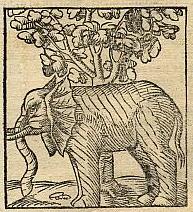 SN 47.2 defines 'sati' (mindfulness ) as doing this all the time (24/7 samādhi ):
kāye kāyā-(a)nu-passī viharati | He lives continuously seeing the body as a body [as it truly is]. |
vedanāsu vedanā-(a)nu-passī viharati | He lives continuously seeing sensations as sensations [as it truly is]. |
citte cittā-(a)nu-passī viharati | He lives continuously seeing a mind as a mind [as it truly is]. |
dhammesu dhammā-(a)nu-passī viharati | He lives continuously seeing ☸Dharma as ☸Dharma [as it truly is]. |
(… elided refrain from each way…) | [in each of the 4 ways of remembering]: |
ātāpī sampajāno satimā, | he is ardent 🏹, he has lucid discerning 👁, he remembers 🐘 [to apply relevant ☸Dharma]. |
vineyya loke abhijjhā-do-manassaṃ; | he should remove greed and distress regarding the world. |
MN 1
1.1.1 - (perceives [sañjānāti] form as form, conceives wrong ideas and identity around form)
“Idha, bhikkhave, assutavā puthujjano ariyānaṃ adassāvī ariyadhammassa akovido ariyadhamme avinīto, sappurisānaṃ adassāvī sappurisadhammassa akovido sappurisadhamme avinīto— | “Take an uneducated ordinary person who has not seen the noble ones, and is neither skilled nor trained in the teaching of the noble ones. They’ve not seen good persons, and are neither skilled nor trained in the teaching of the good persons. |
pathaviṃ pathavito sañjānāti; | They perceive earth as earth. |
pathaviṃ pathavito saññatvā pathaviṃ maññati, pathaviyā maññati, pathavito maññati, pathaviṃ meti maññati, pathaviṃ abhinandati. | But then they conceive earth, they conceive regarding earth, they conceive as earth, they conceive that ‘earth is mine’, they take pleasure in earth. |
1.1.2 - (why? Because they don’t completely understand [A-pariññātaṃ] form)
Taṃ kissa hetu? | Why is that? |
‘Apariññātaṃ tassā’ti vadāmi. (1) | Because they haven’t completely understood it, I say. |
Āpaṃ āpato sañjānāti; | They perceive water as water. |
āpaṃ āpato saññatvā āpaṃ maññati, āpasmiṃ maññati, āpato maññati, āpaṃ meti maññati, āpaṃ abhinandati. | But then they conceive water … |
(earth is part of rūpa), MN 1 covers all 4 elements, all samādhi attainments, etc.
again, just satipatthana formula stated in slightly different way.
SN 56.1 Samādhi
Undistractible-Lucidity
1. Samādhisutta | 1. undistractible-lucidity |
Sāvatthi-nidānaṃ. | At Sāvatthī. (this) originates |
… pe … | … |
“Samādhiṃ, bhikkhave, bhāvetha. | “undistractible-lucidity, monks: (you) must-develop (that). |
Samāhito, bhikkhave, bhikkhu | {for a monk} (who has become)-undistractible-&-lucid, |
yathā-bhūtaṃ pajānāti. | [reality] as-it-actually-has-become, (he) discerns. |
Kiñ-ca yathā-bhūtaṃ pajānāti? | And-what (is the) [reality] as-it-actually-has-become, (which he) discerns? |
(Without samādhi, you can’t fully penetrate 4nt noble truths)
‘Idaṃ dukkhan’ti | (4nt #1) ‘This is pain-&-suffering’ |
yathā-bhūtaṃ pajānāti, | as-it-actually-has-become; (he) discerns (that). |
‘ayaṃ dukkha-samudayo’ti | (4nt #2) ‘This is pain-&-suffering's-- origination’ |
yathā-bhūtaṃ pajānāti, | as-it-actually-has-become; (he) discerns (that). |
‘ayaṃ dukkha-nirodho’ti | (4nt #3) ‘This is pain-&-suffering's-- cessation’ |
yathā-bhūtaṃ pajānāti, | as-it-actually-has-become; (he) discerns (that). |
‘ayaṃ dukkha-nirodha-gāminī paṭipadā’ti | (4nt #4) ‘This is pain-&-suffering's--cessation-way-of-practice’ |
yathā-bhūtaṃ pajānāti. | as-it-actually-has-become; (he) discerns (that). |
Again, same as satipatthana formula, just in terms of dukkha instead of "body, sensations,..." which is also part of 5uk aggregates.
Comments
Post a Comment