
Śarīra (cremated relics) multiplying in Ajahn Mun Thai Forest tradition

4/11/2020: Most of the stories in this article have been removed. The explanation is,  in the forest tradition we should only share these stories among friends in private. If it were to be shared publicly, it may have undesirable and unexpected effects in how the stories are perceived.  

Ajahn Mun (1870-1949) : patriarch of modern Thai Forest Tradition
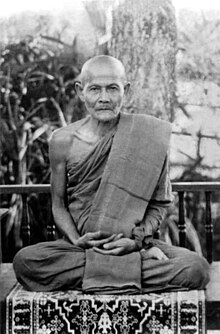

Portrait of Ajahn Mun.jpg


AF = Ajahn Fuang (1915-1986), B. Thanissaro's teacher

Fuang Jotiko (1915–1986).jpg


A reliquary (also referred to as a shrine or by the French term châsse) is a container for relics. These may be the purported or actual physical remains of saints, such as bones, pieces of clothing, or some object associated with saints or other religious figures.


Ajahn Lee and B. Thanissaro
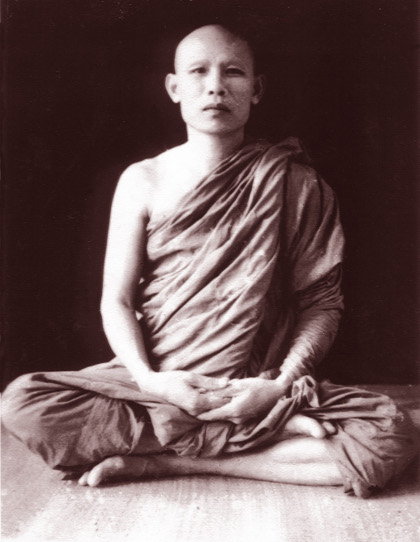
Photographs | The Autobiography of Phra Ajaan LeeAjaan Thanissaro Bhikkhu - Home | Facebook


6. 2004 Indonesia tsunami, 2 Buddha sarira rescued to Taiwan from Sri Lanka via Deva teleporting


(Report from close friend): I have heard so many accounts of relics multiplying that this phenomena just seems like a normal occurrence.  Growing up in the Pure Land tradition, there are many, many accounts of famous monks' relics (including many Pure Land monks'), famous lay Pure Land and Zen practitioners' relics, and Buddha's relics multiplying.  They come in all colors, sizes, and shapes.

My uncle, a President of a Taiwan Buddhist Association, and a doctor known for tirelessly giving free medical service to monks and nuns,
 told me that just before the massive tsunami of 2004, an abbott of a Sri Lankan monastery that contained two Buddha's relics decided to give one of the two relics to a monastery at Taiwan.  And after the relic was secured in the Taiwan monastery stupa, it mysteriously disappeared.  So the monastery at Taiwan requested for the second relic from the Sri Lankan monastery and gained approval.  Soon after the arrival of the second relic, the Sri Lankan monastery was destroyed by the great tsunami.  And even more interestingly, the original relic that disappeared in the Taiwan stupa reappeared in the stupa.

Comments

Popular posts from this blog

Lucid24.org: What's new?

Link to lucid24.org home page :    4👑☸   Remember, you may have to click the refresh button on your web browser navigation bar at to get updated website. 2024 9-17 Lots of new stuff in the last 2 and a half years.  Too many to list. Main one justifying new blog entry, is redesign of home page. Before, it was designed to please me, super dense with everything in one master control panel. I've redesigned it to be friendly to newbies and everyone really. Clear structure, more use of space.  At someone's request, I added a lucid24.org google site search at top of home page. 2022 4-14 Major update to lucid24.org, easy navigation of suttas, quicklink: the ramifications 4-2 new feature lucid24.org sutta quick link 3-28 A new translation of SN 38.16, and first jhāna is a lot easier than you think 🔗📝notes related to Jhāna force and J.A.S.I. effect AN 9.36, MN 64, MN 111: How does Ajahn Brahm and Sujato's "Jhāna" work here? 3-13 Added to EBPedia J.A.S.I. ('Jazzy...

AN 9.36, MN 64, MN 111: How does Ajahn Brahm and Sujato's "Jhāna" work here?

What these 3 suttas have in common, AN 9.36, MN 64, MN 111, is the very interesting feature of explicitly describing doing vipassana, while one is in the jhāna and the first 3 formless attainments. LBT (late buddhist text) apologists, as well as Sujato, Brahm, claim that the suttas describe a jhāna where one enters a disembodied, frozen state, where vipassana is impossible until one emerges from that 'jhāna'.  Since Sujato translated all the suttas, let's take a look at what he translated, and how it supports his interpretation of 'jhāna'.  AN 9.36: Jhānasutta—Bhikkhu Sujato (suttacentral.net) ‘The first absorption is a basis for ending the defilements.’ ‘Paṭhamampāhaṁ,   bhikkhave,   jhānaṁ   nissāya   āsavānaṁ   khayaṁ   vadāmī’ti,   iti   kho   panetaṁ   vuttaṁ. That’s what I said, but why did I say it? Kiñcetaṁ   paṭicca   vuttaṁ? Take a mendicant who, q uite secluded from sensual pleasures, secluded from unskill...

Pāḷi and Sanskrit definition of Viveka

  'Viveka', Sanskrit dictionary Primary meaning is ‘discrimination’. Other meanings:  (1) true knowledge,  (2) discretion,  (3) right judgement,  (4) the faculty of distinguishing and classifying things according to their real properties’. Wikipedia (sanskrit dictionary entry 'viveka') Viveka (Sanskrit: विवेक, romanized: viveka) is a Sanskrit and Pali term translated into English as discernment or discrimination.[1] According to Rao and Paranjpe, viveka can be explained more fully as: Sense of discrimination; wisdom; discrimination between the real and the unreal, between the self and the non-self, between the permanent and the impermanent; discriminative inquiry; right intuitive discrimination; ever present discrimination between the transient and the permanent.[2]: 348  The Vivekachudamani is an eighth-century Sanskrit poem in dialogue form that addresses the development of viveka. Within the Vedanta tradition, there is also a concept of vichara which is one t...